
The short answer: a digital marketing agency for education should help you fill the right seats with students who will stay, succeed and recommend you, not just generate enquiries. That means reaching both students and the parents who often decide or pay, answering their questions honestly at each step of the admissions journey, following the advertising and privacy rules that apply to education, and measuring marketing in enrolments rather than clicks.
This guide is for founders, principals, admissions heads and marketing teams at schools, colleges, coaching institutes, skill and vocational institutes and online course providers. It explains how families choose, how to plan marketing around your admissions calendar, which channels suit which kind of institution, what you can and cannot claim about results, and how to protect young people’s data.
Why education marketing is different
- Two audiences make one decision. A student wants the course, the campus life, the friends and the outcome. A parent wants safety, results, value and trust. Often both have to be convinced, and they look in different places.
- The decision is high-stakes and hard to reverse. Families are choosing years of a young person’s life and a large share of their savings. They research carefully and compare.
- Demand follows a calendar. Admissions, board results, entrance exams and academic years create peaks. Marketing that runs at the same level all year wastes money in some months and misses others.
- Results claims are tightly regulated. In India, misleading claims by coaching institutes are now specifically covered by consumer protection guidelines. In many markets, claims about rankings, placements and outcomes need evidence.
- Many prospects are minors. Data protection laws and platform rules limit how you can collect data from, and advertise to, young people.
First, which kind of institution are you?
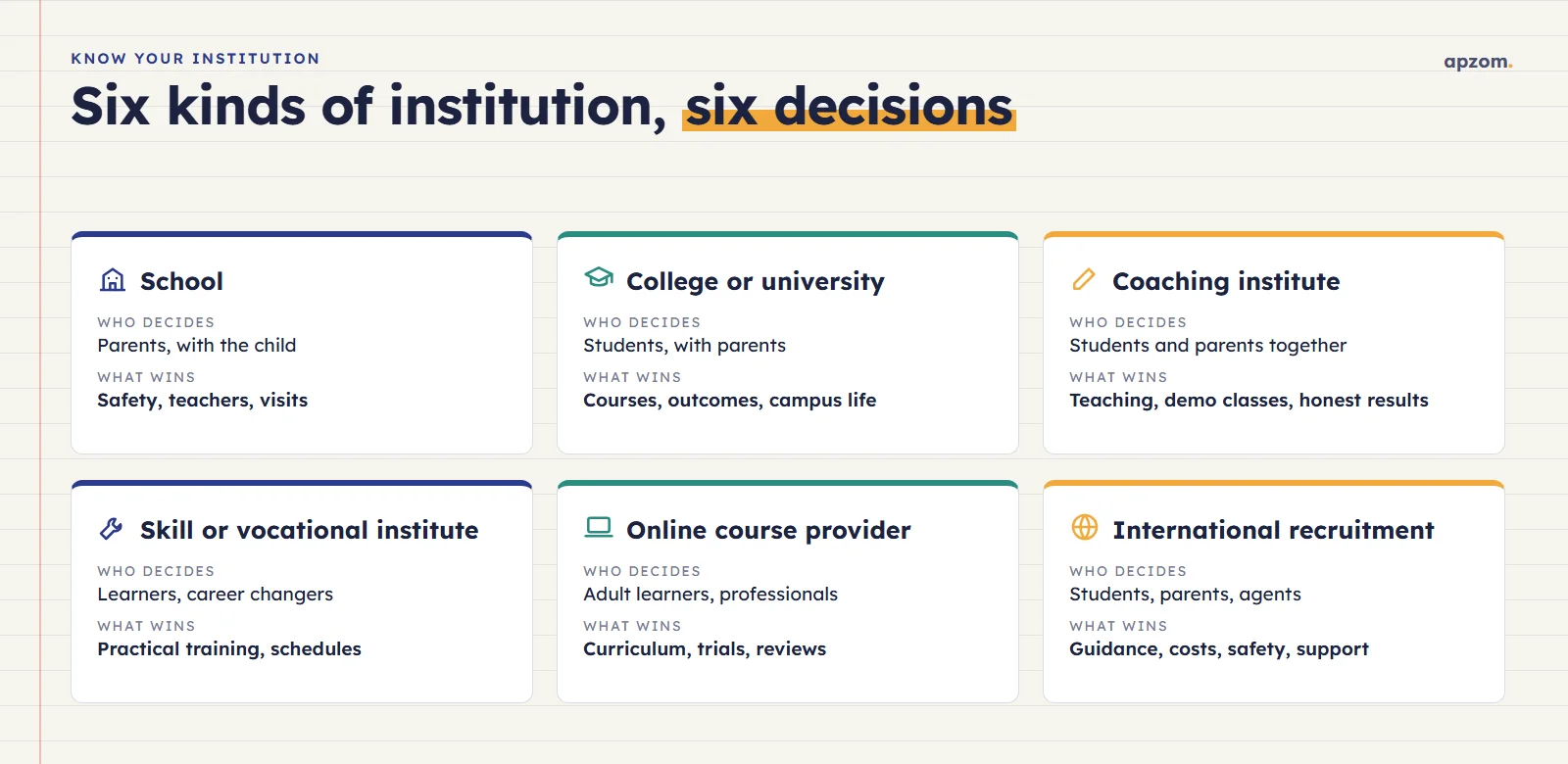
| Institution type | Who decides | How they search | What wins the enrolment |
|---|---|---|---|
| School | Parents, with the child | Local search and Maps, word of mouth, school visits | Safety, teachers, results presented honestly, facilities, visits |
| College or university | Students, with parents | Course and location searches, rankings, social media, education portals | Course content, faculty, outcomes, campus life, fees and scholarships |
| Coaching or test-prep institute | Students and parents together | Exam-specific searches, YouTube, word of mouth | Teaching quality, demo classes, honest results, batch timings, fees |
| Skill or vocational institute | Learners and career changers | Course plus career searches, social media | Practical training, placement support described honestly, schedules |
| Online course provider | Adult learners, professionals | Topic searches, YouTube, social, reviews | Curriculum, instructors, flexibility, free trials, reviews |
| International student recruitment | Students, parents, agents | Country plus course searches, counsellors, social media | Visa and admission guidance, outcomes, costs, safety, support |
A school that markets like a coaching institute, all toppers and rank claims, can lose parents who want a well-rounded education. An online course that markets like a school sounds slow. Decide which rows describe you.
The two-audience problem
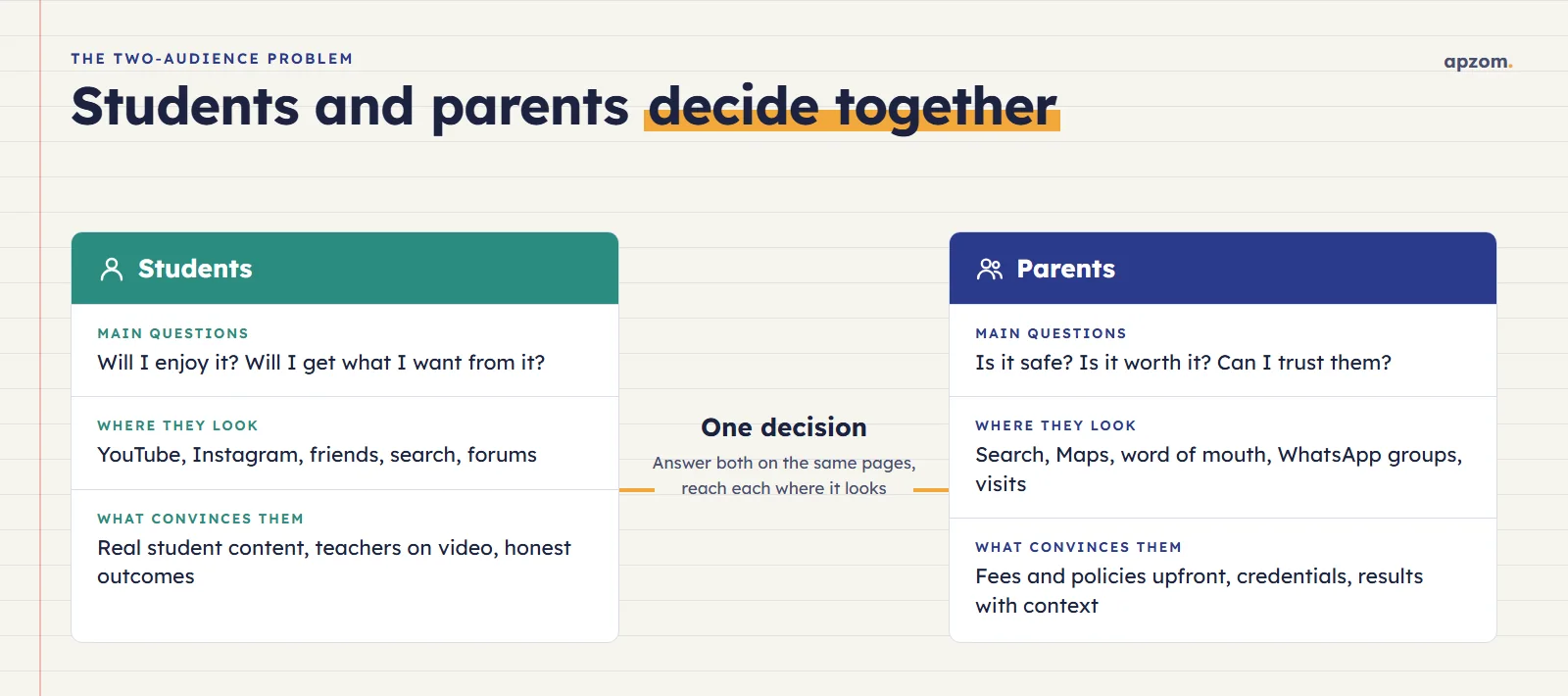
| Question | Students | Parents |
|---|---|---|
| Main questions | Will I enjoy it? Will I get what I want from it? Will my friends be there? | Is it safe? Is it worth the money? Will my child succeed? Can I trust them? |
| Where they look | YouTube, Instagram, friends, search, forums | Search, Maps, word of mouth, WhatsApp groups, school visits |
| What convinces them | Real student content, teachers on video, campus life, honest outcomes | Credentials, fees and policies upfront, safety, results with context, meeting staff |
| What puts them off | Corporate tone, stock photos, overselling | Hidden fees, vague answers, pressure tactics, unverifiable claims |
You do not need two websites. You need pages that answer both sets of questions, and campaigns that reach each audience where it actually looks.
The admissions journey
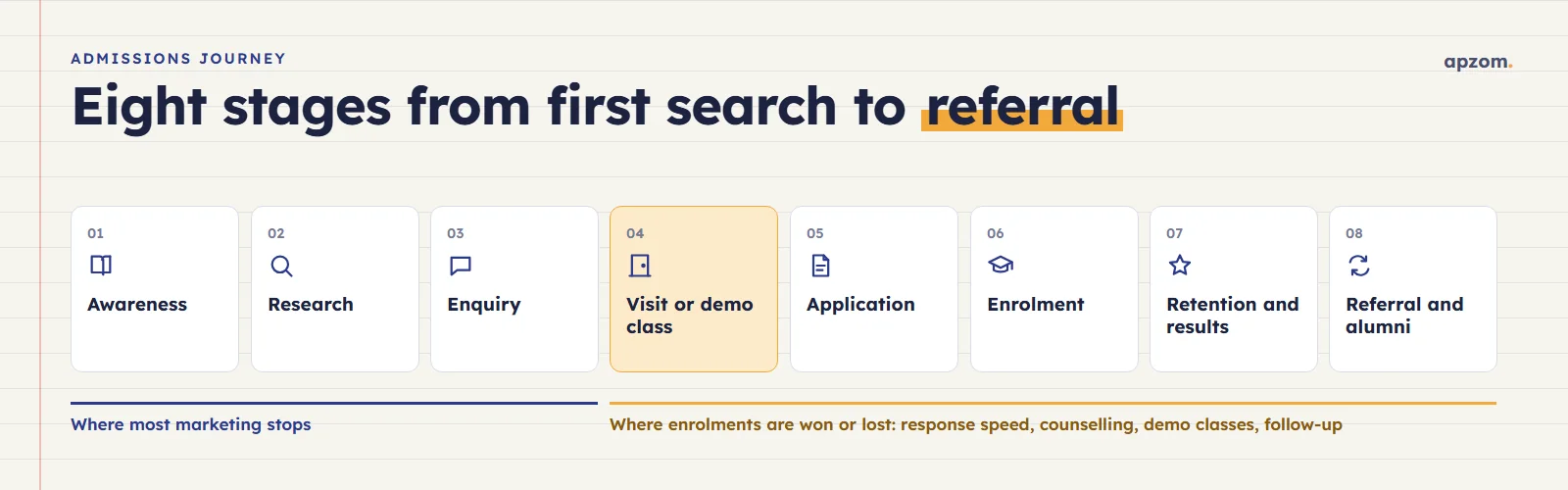
- Awareness: a family starts to think about a school, course or exam.
- Research: they compare options, read reviews, watch videos and check fees.
- Enquiry: a call, form, WhatsApp message or walk-in.
- Counselling, visit or demo class: the point where most decisions are really made.
- Application: forms, documents, entrance tests or interviews.
- Enrolment and fee payment: the seat is filled.
- Retention and results: the student stays, learns and progresses.
- Referral and alumni: happy families and alumni bring the next students.
Marketing that stops at stage three hands sales a pile of enquiries and walks away. The best education marketing also improves stages four to eight: how fast enquiries are answered, how counselling is run, what happens after a demo class, and how happy students and parents are encouraged to share their experience.
Answering enquiries fast and well
An enquiry from a parent is often one of several they send in the same evening. The institution that replies first with a helpful, personal answer, not just a brochure, has an advantage. Set a response time target, decide who owns enquiries, and track what happens to each one.
Plan marketing around your admissions calendar
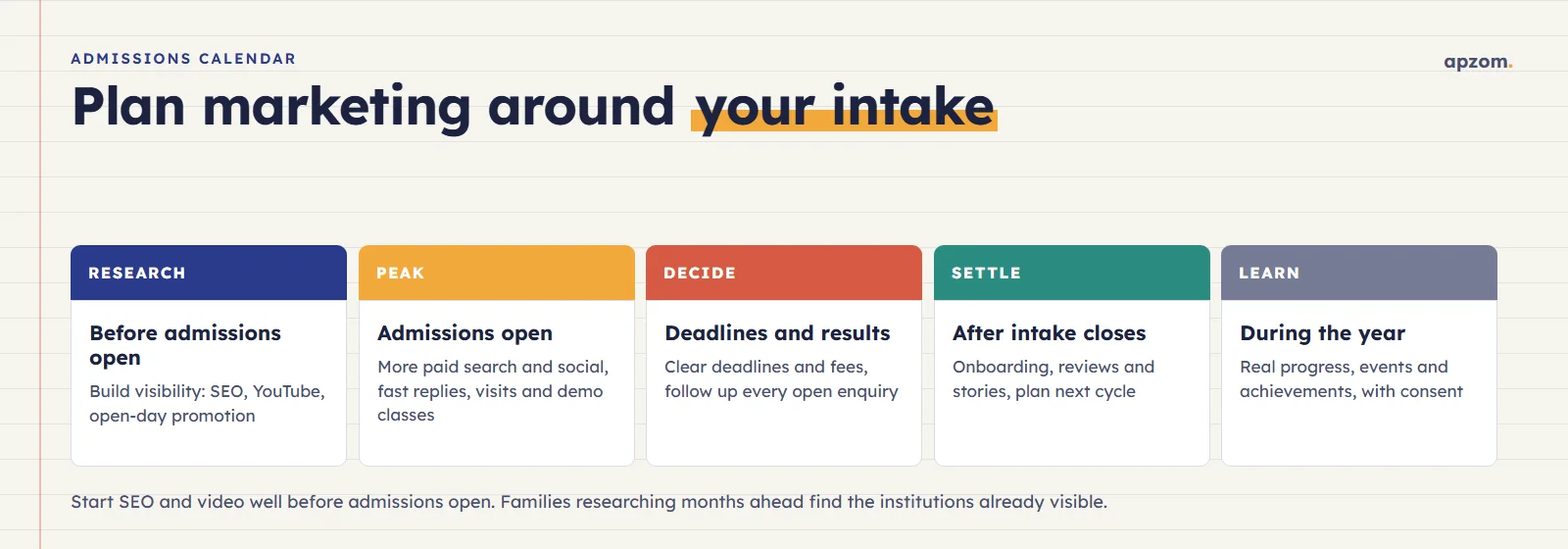
Every institution has its own calendar, but most follow a similar pattern:
| Period | What families are doing | What marketing should do |
|---|---|---|
| Before admissions open | Early research, shortlisting | Build visibility: SEO, YouTube, open-day promotion, alumni stories |
| Admissions open | Enquiring, visiting, comparing | Increase paid search and social, respond fast, run visits and demo classes |
| Decision deadlines and results | Final decisions, often under pressure | Clear deadlines, fee and scholarship details, follow up every open enquiry |
| After the intake closes | Settling in | Onboarding content, collect reviews and stories, plan next cycle |
| During the year | Students learning | Share real progress, events and achievements with consent |
Do not wait for admissions to open before starting SEO or YouTube. Families researching months ahead find the institutions that are already visible.
What you can and cannot claim
Results are the most powerful thing an institution can show, and the easiest to show misleadingly.
India: coaching sector guidelines
In November 2024, India’s Central Consumer Protection Authority issued guidelines for preventing misleading advertisements in the coaching sector, covering coaching centres with more than fifty students. In plain terms, they mean:
- Do not make false or unsubstantiated claims about success rates, selections or rankings.
- When you show a successful student’s photo, also show the rank secured, the name and duration of the course they took and whether it was paid, and get the student’s written consent after their selection.
- Do not promise guaranteed selection, ranks or jobs.
- Print disclaimers in the same font as the claim, not hidden in small print.
- Do not create false urgency or scarcity, such as fake “last few seats” messages.
The authority has been enforcing them: by May 2026 it reported penalties of over ₹1.39 crore on 31 coaching institutes. The Ministry of Education’s 2024 model guidelines for coaching centres, which states put into effect through their own laws, also bar misleading promises of ranks or marks. And the Advertising Standards Council of India’s guidelines for education ads ask that recognition, placement and topper claims be backed by evidence and rule out claims such as “100% placement”.
If you are a coaching institute, read the guidelines in full and check your website, ads, banners and social posts against them. A topper’s photo used without context or consent is a risk, not a marketing asset.
Other markets
- In many countries, advertising rules require that claims about rankings, placements, salaries or outcomes can be substantiated. In the UK, for example, the advertising code says course ads must not give a misleading impression of the employment that might follow. In the US, federal rules on misrepresentation apply to institutions in federal student aid programmes and to the marketers they hire. Keep the evidence behind every number you publish.
- Use real students and staff only with consent, and never use stock photos as if they show your campus.
- State fees, extra charges and refund policies clearly. Hidden costs damage trust faster than any ad can build it.
Young people’s data and ad targeting
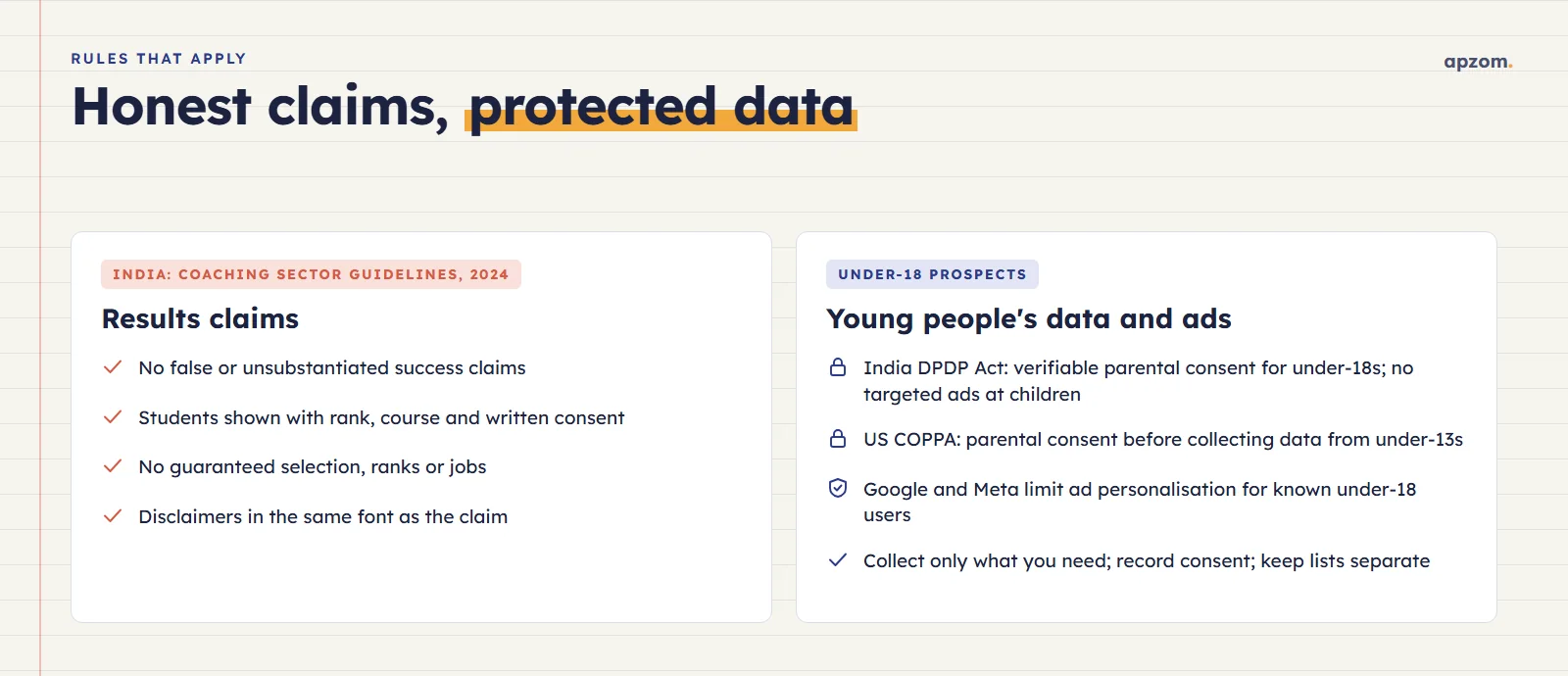
Many of your prospects are under 18, and some are much younger. Several rules apply:
- India: the Digital Personal Data Protection Act, 2023 requires verifiable parental consent to process a child’s personal data, meaning anyone under 18, and prohibits tracking, behavioural monitoring and targeted advertising directed at children. The main obligations under the DPDP Rules phase in over 18 months from November 2025.
- United States: the Children’s Online Privacy Protection Act (COPPA) requires verifiable parental consent before collecting personal information online from children under 13.
- Ad platforms: Google and Meta both limit how ads can be personalised for users they know are under 18. Plan campaigns to reach parents, and older students where permitted, rather than trying to micro-target children.
In practice: design enquiry forms for parents and adult students, collect only the information you need, record consent, and keep marketing lists separate from student records.
Channels: what fits which institution
| Channel | Best job | Fits best |
|---|---|---|
| Google Search and SEO | Course, exam, location and fee searches | Every institution |
| Google Business Profile and Maps | Local discovery, directions, reviews | Schools, coaching centres, campuses |
| YouTube | Demo lessons, teachers, campus tours, student stories | Coaching, colleges, online courses |
| Instagram and Facebook | Campus life, events, reaching parents and older students | Schools, colleges, coaching |
| Fast, personal follow-up with consent | Schools, coaching, colleges in India | |
| Nurturing applicants and staying in touch with alumni | Colleges, online courses | |
| Webinars, open days and demo classes | The conversion moment for many families | Every institution |
| Education portals and directories | Comparison shopping by students | Colleges, courses |
| Referral and alumni programmes | Trusted word of mouth | Every institution |
SEO for education: pages that answer real questions
Families search with specific questions: the course, the exam, the location, the fees, the eligibility, the deadlines. Build pages that answer them:
- Course or programme pages: what is taught, who it suits, duration, schedule, eligibility, fees, outcomes described honestly, and who teaches it.
- Admissions pages: process, deadlines, documents and scholarships, kept up to date.
- Location and campus pages: genuine campuses and centres only, with directions, facilities and photos.
- Faculty pages: real teachers with real qualifications. Families want to know who will teach their child.
- Answer pages: “how to prepare for [exam]”, “what is the difference between [course A] and [course B]”, written by your teachers.
Schema.org has types such as EducationalOrganization, School, CollegeOrUniversity and Course. Use them to describe what is true on the page. Note that Google retired its Course info rich results in 2025, so course markup helps search engines understand your pages rather than producing a special display. Apzom’s SEO services and local SEO start from these pages, and our Google Business Profile checklist covers your Maps presence.
Paid search and social
Google Ads works best on specific, high-intent searches during admissions: course plus location, exam coaching plus city, course plus “admission”. Use negative keywords to filter jobs, free material and unrelated courses, and send each campaign to the matching course page.
Meta Ads on Instagram and Facebook are useful for reaching parents and older students with campus life, events and open days. Keep the targeting within platform rules for younger users, and send people to a fast page where they can book a visit or demo class.
Video: let families meet your teachers
Short videos of real teachers explaining a topic, real classrooms, and real students talking about their experience (with consent) do more than any brochure. Demo lessons on YouTube can bring families who are already convinced by the time they enquire.
Plenty of enquiries but not enough enrolments? An Admissions Marketing Audit checks how families find you, what your course and admissions pages answer, how fast enquiries are handled, and whether your results claims and data handling follow the rules.
Measure enrolments, not enquiries
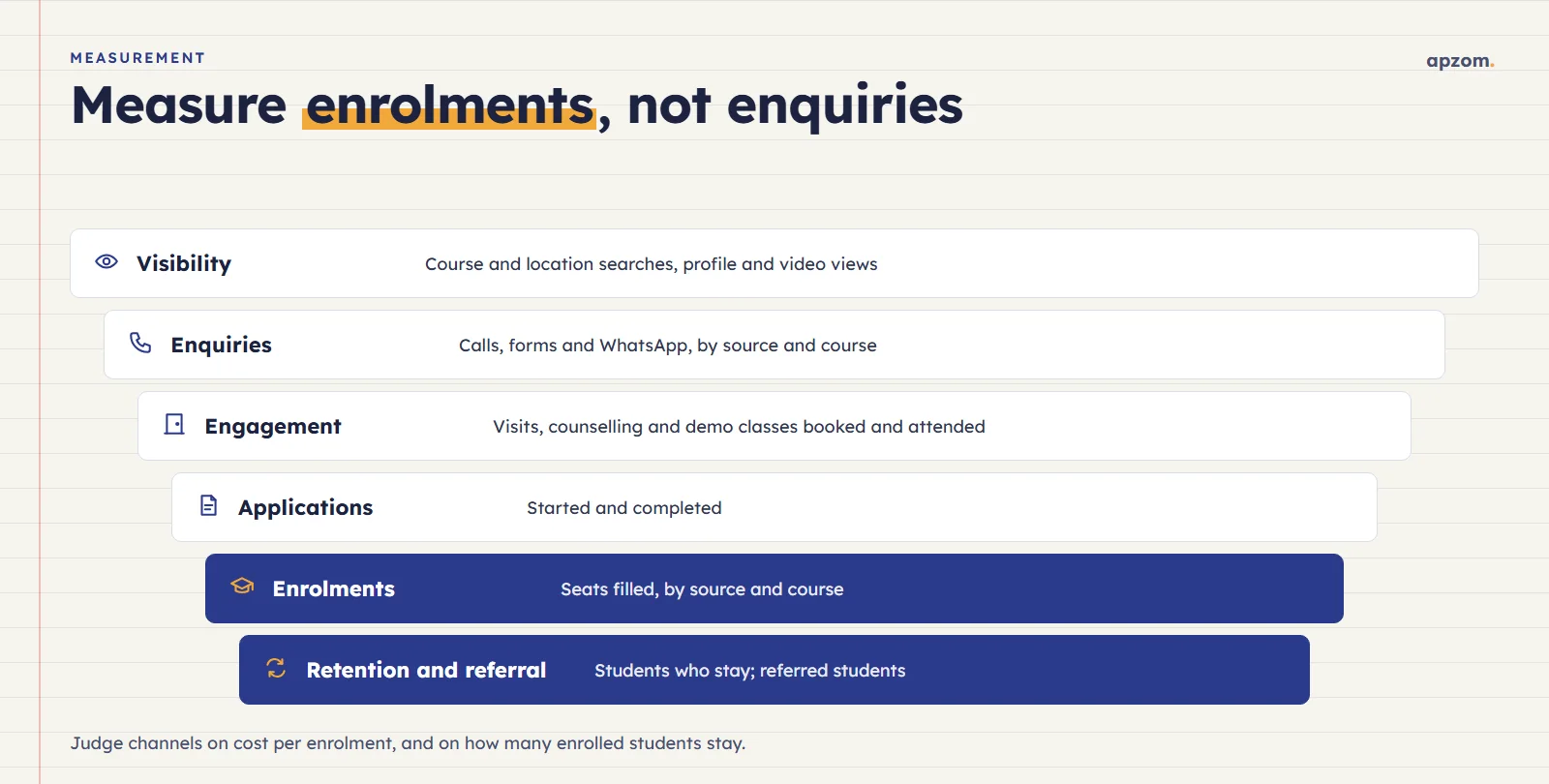
| Stage | What to measure |
|---|---|
| Visibility | Search impressions and clicks for course and location searches, profile views, video views |
| Enquiries | Calls, forms and WhatsApp messages, by source and course |
| Engagement | Visits, counselling sessions and demo classes booked, and how many attend |
| Applications | Applications started and completed |
| Enrolments | Seats filled, by source and course |
| Retention and referral | Students who stay, and new students who came through referrals |
Track the source of every enquiry through to enrolment, even in a simple spreadsheet or CRM. Cost per enquiry is a weak guide; cost per enrolment, and how many of those students stay, is what matters. Be wary of anyone quoting typical cost per lead or conversion rates for education; they vary widely by course, location, fee level and season.
AI search and education
Students and parents increasingly ask AI tools questions such as “which course should I take after 12th” or “how do I choose a coaching institute”. Nobody can guarantee your institution will be mentioned. Google says there are no special requirements to appear in its AI features. Clear, accurate course, fee and admissions information, real faculty pages, honest outcome data with context and helpful answers written by your teachers give you the best chance of being understood and referenced.
What an education marketing agency should actually do
Questions to ask
- How will you reach both students and parents?
- How will you plan around our admissions calendar?
- How will you check our results claims against advertising rules?
- How will you handle data from students under 18?
- How will you report on enrolments, not just leads?
Red flags
- Promises of a guaranteed number of admissions.
- Topper photos and rank claims without consent or context.
- Stock photos of campuses or students that are not yours.
- Lead lists bought from third parties.
- Reports that stop at clicks, followers and form fills.
How Apzom can help
Apzom Digital helps organisations earn trust before the first conversation. For education, that means SEO built around your courses and admissions, Google Ads and paid social planned around your intake calendar, website development with clear course and admissions pages, and content marketing built from your teachers’ knowledge. We do not have an education case study to show yet, and we will not invent enrolment figures. If you are comparing agencies, our guide on how to choose a digital marketing agency lists the questions worth asking.
Request an Admissions Marketing Audit. We review your course, admissions and fee pages, Google Business Profile and reviews, paid search and social against your admissions calendar, results claims, enquiry handling and follow-up, data and consent, and how enquiries are tracked to enrolments. You get a prioritised list of what to fix first.
The audit is free, with no obligation and no guaranteed admissions. Prefer to talk it through? Contact us or see all our services.
Frequently asked questions
What does a digital marketing agency for education do?
It helps schools, colleges, coaching institutes and course providers reach the right students and parents, answer their questions honestly, turn enquiries into visits, demo classes and applications, and measure results in enrolments. A good one also keeps results claims and data handling within the rules.
How can a school or college get more admissions?
Be easy to find for the specific courses and locations families search for, publish clear course, fee and admissions information, show real teachers and campus life, answer enquiries fast and personally, run visits or demo classes, and follow up every open enquiry before deadlines.
Can coaching institutes advertise their toppers?
In India, coaching advertisements must follow the 2024 consumer protection guidelines for the coaching sector. Claims about results must be truthful, successful students must be shown with their rank, course name and duration and whether the course was paid, with their written consent, and selection cannot be falsely guaranteed.
Can we run ads targeted at students under 18?
Platforms such as Google and Meta limit how ads can be personalised for users they know are under 18, and data protection laws such as India’s DPDP Act and the US COPPA rule restrict collecting children’s data. Plan campaigns mainly around parents and adult students, and follow platform rules.
Is SEO worth it for educational institutions?
Yes. Families research courses, fees and admissions in detail, often months before applying. Course, admissions, campus and faculty pages that answer those questions can bring steady enquiries for years.
When should education marketing start for an admissions cycle?
Well before admissions open. SEO, YouTube and reputation take months to build. Paid campaigns can then increase when admissions open and ease off after the intake closes.
Which social media platform is best for education marketing?
It depends on who you need to reach. YouTube suits demo lessons and course explanations, Instagram suits campus life and older students, and Facebook and WhatsApp often reach parents. Measure enrolments by source rather than followers.
How do we measure education marketing?
Track enquiries, visits or demo classes, applications and enrolments by source and course, then retention and referrals. Judge channels on cost per enrolment and on how many enrolled students stay.